Supporting Local Artisans: Why Buying Bangladeshi Handmade Products Matters
April 16, 2026
|
handmade
artisan
jamdani
nakshi kantha
local crafts
Bangladesh culture
<h2>A Heritage Worth Preserving</h2>
<p>Bangladesh possesses one of the richest handcraft traditions in South Asia, yet many of these traditions face an uncertain future. Jamdani weaving, a UNESCO Intangible Cultural Heritage, employs thousands of weavers in Sonargaon and surrounding areas — but the number of master weavers who can produce the finest muslin-grade jamdani has dwindled to a few hundred. Nakshi kantha embroidery, once practiced in virtually every rural Bangladeshi household, is increasingly being replaced by machine-made imitations. The brass workers of Dhamrai, the pottery makers of Rajshahi, the silk weavers of Rajshahi's Sopura — each community carries centuries of accumulated skill that cannot be replicated by factory production.</p>
<p>When you purchase a handmade product from a Bangladeshi artisan, you're not just buying an object. You're participating in an economic transaction that directly sustains a cultural tradition. The ৳2,000 you spend on a handwoven nakshi kantha doesn't disappear into a corporate supply chain — it goes to a woman in Jessore or Faridpur who learned the art from her mother, who learned it from hers. That direct connection between buyer and maker is something no factory-produced item can offer.</p>
<h2>The Artisan Communities of Bangladesh</h2>
<p>Bangladesh's handcraft traditions are geographically distributed, with specific skills concentrated in particular regions. Understanding this geography helps you appreciate what you're buying and verify its authenticity.</p>
<p>Jamdani, the crown jewel of Bangladeshi textiles, is primarily produced in Rupganj and Sonargaon in Narayanganj district. The weaving process is extraordinarily labor-intensive — a single jamdani saree can take 3-6 months to complete, with two weavers working simultaneously on a single loom. The distinctive geometric and floral patterns are woven directly into the fabric using a supplementary weft technique, not printed or embroidered afterward. This is why authentic jamdani commands premium prices and why cheap "jamdani print" sarees are a fundamentally different product.</p>
<p>Tangail, in the district of the same name, is famous for its cotton and silk sarees with distinctive borders. The Tangail weavers' cooperative system is one of the most organized artisan networks in Bangladesh, with generations of families specializing in specific pattern styles. Muslin, once the most famous textile export from Bengal (so fine that the British described it as "woven air"), is undergoing a revival effort, with researchers at BUET and the Drik gallery working to recreate the legendary Dhaka muslin from heritage cotton varieties.</p>
<p>Nakshi kantha, the embroidered quilt, originated as a form of textile recycling — women would layer old saris and secure them with running stitches that gradually evolved into elaborate pictorial narratives. Today, nakshi kantha is produced commercially in Jessore, Rajshahi, Faridpur, and Mymensingh, with each region having slightly different stylistic traditions. The Jessore tradition tends toward bold, large-scale pictorial designs, while Mymensingh kanthas often feature more geometric patterns.</p>
<h2>How E-Commerce Is Changing the Game for Artisans</h2>
<p>Traditionally, Bangladeshi artisans sold through middlemen who controlled access to urban markets. A weaver in Tangail might receive ৳1,500 for a saree that eventually sold for ৳5,000 in a Dhaka boutique — the middleman captured most of the value. E-commerce platforms like Khansland Shop are disrupting this pattern by giving artisans (or their cooperatives) direct access to buyers.</p>
<p>The impact is transformative. When an artisan cooperative lists directly on Khansland Shop, the weaver who produced a ৳5,000 saree might receive ৳3,500-৳4,000 instead of ৳1,500. That additional income — sometimes doubling or tripling their per-item earnings — means the difference between a craft being economically viable and it being abandoned for factory work. Young people in artisan families are more likely to learn traditional skills when those skills can actually provide a decent living.</p>
<p>Digital platforms also solve the discovery problem. A pottery maker in Rajshahi previously had no way to reach a buyer in Sylhet who wanted handmade terracotta décor. Online marketplaces create a national market for products that were previously limited to local bazaars. This expanded reach means artisans can specialize in higher-quality, higher-margin products rather than competing on volume with factory goods.</p>
<h2>How to Identify Authentic Handmade Products</h2>
<p>As handmade products gain popularity, imitations have flooded the market. Machine-made products marketed as "handmade" undercut genuine artisans on price while diluting the meaning of the label. Here's how to tell the difference.</p>
<p>Genuine handmade textiles have slight irregularities that are markers of authenticity, not defects. A handwoven jamdani will have tiny variations in thread tension that create subtle differences across the fabric. Machine-woven imitations are perfectly uniform — which is exactly how you know they're not real. Similarly, handmade pottery will have slight asymmetries and finger marks; brass items will show individual hammer marks; embroidered kanthas will have variations in stitch length and density.</p>
<p>Ask the seller about provenance. Legitimate sellers of handmade products can tell you where the item was made, by whom (or which cooperative), and describe the production process. Vague answers like "made in Bangladesh" or "handcrafted quality" without specifics should raise suspicion. On Khansland Shop, look for the "Artisan Verified" badge, which indicates the platform has verified the seller's connection to an actual artisan community.</p>
<h2>Categories of Handmade Products Available Online</h2>
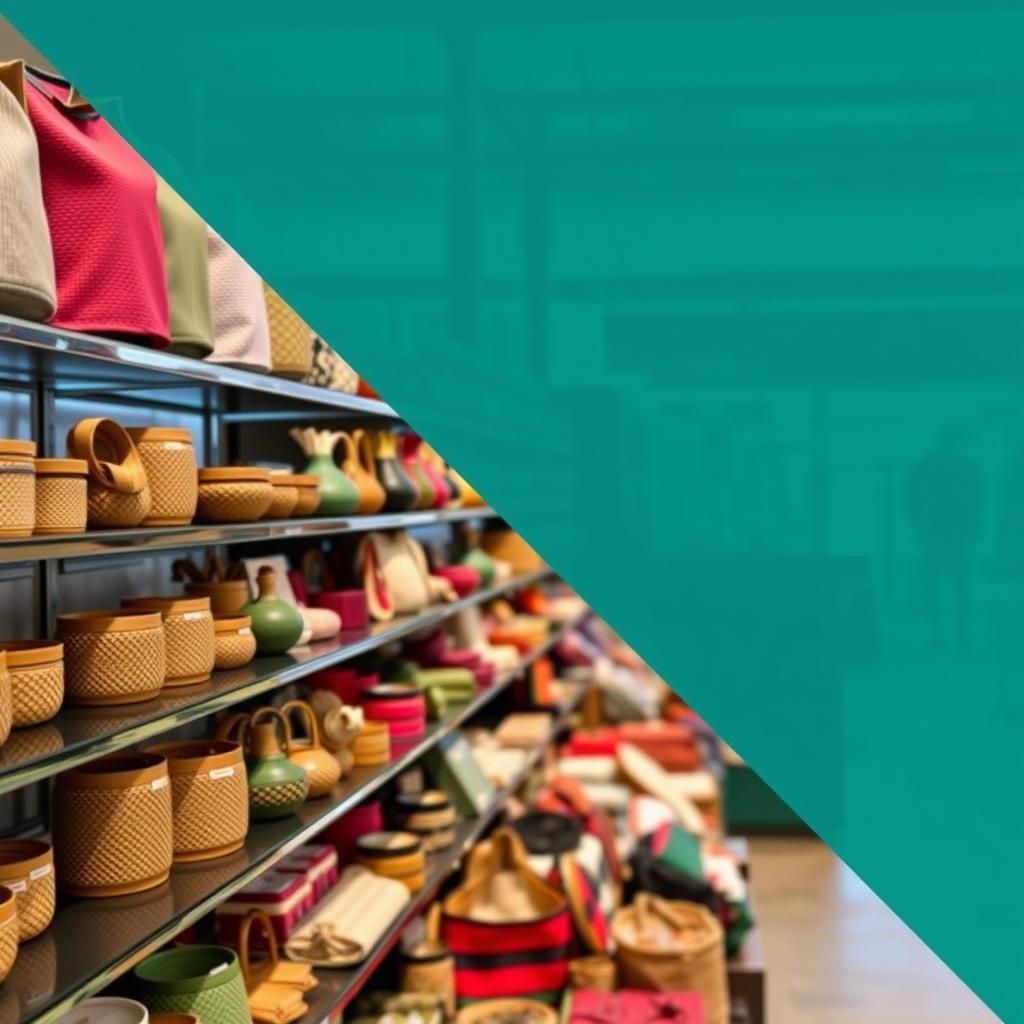
<p>The range of Bangladeshi handmade products available through e-commerce has expanded dramatically. Beyond the traditional staples of textiles and pottery, you can now find handmade leather goods from Old Dhaka's leather workers, bamboo and cane furniture from the Chittagong Hill Tracts, silver filigree jewelry from the silversmith communities, handmade soaps and cosmetics using traditional botanical ingredients, and hand-painted rickshaw art adapted into home décor. Each product carries a story and a community behind it.</p>
<p>Home décor is an especially fast-growing category. Young urban Bangladeshis are increasingly interested in decorating their apartments with items that reflect Bengali cultural identity rather than mass-produced imported décor. Terracotta wall pieces, handloom throw pillows, brass accent items, and framed nakshi kantha panels satisfy this growing aesthetic demand while supporting artisan livelihoods.</p>
<h2>The Price Premium and Why It's Worth Paying</h2>
<p>Handmade products typically cost more than their factory-made equivalents, and that premium sometimes discourages buyers. But consider what you're getting for the difference. A machine-made bedsheet might cost ৳800 and last two years. A nakshi kantha costs ৳3,000 but can last decades — many families in Bangladesh have kanthas that are 30-50 years old, still in use, still beautiful. Per year of use, the handmade product is often cheaper.</p>
<p>Beyond durability, you're paying for uniqueness. No two handmade items are identical. The jamdani saree you buy is literally one of a kind — the specific combination of patterns, thread colors, and weaving tensions will never be exactly replicated, even by the same weaver. In a world of mass production, owning something truly unique carries its own value that transcends the price tag.</p>
<p>Most importantly, your purchase has a direct human impact. When you choose handmade, you're choosing to support a family, preserve a skill, and contribute to an economic model that distributes wealth to rural communities rather than concentrating it in urban factories. That's not just shopping — that's participation in building the kind of economy Bangladesh deserves.</p>
<p>Bangladesh possesses one of the richest handcraft traditions in South Asia, yet many of these traditions face an uncertain future. Jamdani weaving, a UNESCO Intangible Cultural Heritage, employs thousands of weavers in Sonargaon and surrounding areas — but the number of master weavers who can produce the finest muslin-grade jamdani has dwindled to a few hundred. Nakshi kantha embroidery, once practiced in virtually every rural Bangladeshi household, is increasingly being replaced by machine-made imitations. The brass workers of Dhamrai, the pottery makers of Rajshahi, the silk weavers of Rajshahi's Sopura — each community carries centuries of accumulated skill that cannot be replicated by factory production.</p>
<p>When you purchase a handmade product from a Bangladeshi artisan, you're not just buying an object. You're participating in an economic transaction that directly sustains a cultural tradition. The ৳2,000 you spend on a handwoven nakshi kantha doesn't disappear into a corporate supply chain — it goes to a woman in Jessore or Faridpur who learned the art from her mother, who learned it from hers. That direct connection between buyer and maker is something no factory-produced item can offer.</p>
<h2>The Artisan Communities of Bangladesh</h2>
<p>Bangladesh's handcraft traditions are geographically distributed, with specific skills concentrated in particular regions. Understanding this geography helps you appreciate what you're buying and verify its authenticity.</p>
<p>Jamdani, the crown jewel of Bangladeshi textiles, is primarily produced in Rupganj and Sonargaon in Narayanganj district. The weaving process is extraordinarily labor-intensive — a single jamdani saree can take 3-6 months to complete, with two weavers working simultaneously on a single loom. The distinctive geometric and floral patterns are woven directly into the fabric using a supplementary weft technique, not printed or embroidered afterward. This is why authentic jamdani commands premium prices and why cheap "jamdani print" sarees are a fundamentally different product.</p>
<p>Tangail, in the district of the same name, is famous for its cotton and silk sarees with distinctive borders. The Tangail weavers' cooperative system is one of the most organized artisan networks in Bangladesh, with generations of families specializing in specific pattern styles. Muslin, once the most famous textile export from Bengal (so fine that the British described it as "woven air"), is undergoing a revival effort, with researchers at BUET and the Drik gallery working to recreate the legendary Dhaka muslin from heritage cotton varieties.</p>
<p>Nakshi kantha, the embroidered quilt, originated as a form of textile recycling — women would layer old saris and secure them with running stitches that gradually evolved into elaborate pictorial narratives. Today, nakshi kantha is produced commercially in Jessore, Rajshahi, Faridpur, and Mymensingh, with each region having slightly different stylistic traditions. The Jessore tradition tends toward bold, large-scale pictorial designs, while Mymensingh kanthas often feature more geometric patterns.</p>
<h2>How E-Commerce Is Changing the Game for Artisans</h2>
<p>Traditionally, Bangladeshi artisans sold through middlemen who controlled access to urban markets. A weaver in Tangail might receive ৳1,500 for a saree that eventually sold for ৳5,000 in a Dhaka boutique — the middleman captured most of the value. E-commerce platforms like Khansland Shop are disrupting this pattern by giving artisans (or their cooperatives) direct access to buyers.</p>
<p>The impact is transformative. When an artisan cooperative lists directly on Khansland Shop, the weaver who produced a ৳5,000 saree might receive ৳3,500-৳4,000 instead of ৳1,500. That additional income — sometimes doubling or tripling their per-item earnings — means the difference between a craft being economically viable and it being abandoned for factory work. Young people in artisan families are more likely to learn traditional skills when those skills can actually provide a decent living.</p>
<p>Digital platforms also solve the discovery problem. A pottery maker in Rajshahi previously had no way to reach a buyer in Sylhet who wanted handmade terracotta décor. Online marketplaces create a national market for products that were previously limited to local bazaars. This expanded reach means artisans can specialize in higher-quality, higher-margin products rather than competing on volume with factory goods.</p>
<h2>How to Identify Authentic Handmade Products</h2>
<p>As handmade products gain popularity, imitations have flooded the market. Machine-made products marketed as "handmade" undercut genuine artisans on price while diluting the meaning of the label. Here's how to tell the difference.</p>
<p>Genuine handmade textiles have slight irregularities that are markers of authenticity, not defects. A handwoven jamdani will have tiny variations in thread tension that create subtle differences across the fabric. Machine-woven imitations are perfectly uniform — which is exactly how you know they're not real. Similarly, handmade pottery will have slight asymmetries and finger marks; brass items will show individual hammer marks; embroidered kanthas will have variations in stitch length and density.</p>
<p>Ask the seller about provenance. Legitimate sellers of handmade products can tell you where the item was made, by whom (or which cooperative), and describe the production process. Vague answers like "made in Bangladesh" or "handcrafted quality" without specifics should raise suspicion. On Khansland Shop, look for the "Artisan Verified" badge, which indicates the platform has verified the seller's connection to an actual artisan community.</p>
<h2>Categories of Handmade Products Available Online</h2>
<p>The range of Bangladeshi handmade products available through e-commerce has expanded dramatically. Beyond the traditional staples of textiles and pottery, you can now find handmade leather goods from Old Dhaka's leather workers, bamboo and cane furniture from the Chittagong Hill Tracts, silver filigree jewelry from the silversmith communities, handmade soaps and cosmetics using traditional botanical ingredients, and hand-painted rickshaw art adapted into home décor. Each product carries a story and a community behind it.</p>
<p>Home décor is an especially fast-growing category. Young urban Bangladeshis are increasingly interested in decorating their apartments with items that reflect Bengali cultural identity rather than mass-produced imported décor. Terracotta wall pieces, handloom throw pillows, brass accent items, and framed nakshi kantha panels satisfy this growing aesthetic demand while supporting artisan livelihoods.</p>
<h2>The Price Premium and Why It's Worth Paying</h2>
<p>Handmade products typically cost more than their factory-made equivalents, and that premium sometimes discourages buyers. But consider what you're getting for the difference. A machine-made bedsheet might cost ৳800 and last two years. A nakshi kantha costs ৳3,000 but can last decades — many families in Bangladesh have kanthas that are 30-50 years old, still in use, still beautiful. Per year of use, the handmade product is often cheaper.</p>
<p>Beyond durability, you're paying for uniqueness. No two handmade items are identical. The jamdani saree you buy is literally one of a kind — the specific combination of patterns, thread colors, and weaving tensions will never be exactly replicated, even by the same weaver. In a world of mass production, owning something truly unique carries its own value that transcends the price tag.</p>
<p>Most importantly, your purchase has a direct human impact. When you choose handmade, you're choosing to support a family, preserve a skill, and contribute to an economic model that distributes wealth to rural communities rather than concentrating it in urban factories. That's not just shopping — that's participation in building the kind of economy Bangladesh deserves.</p>
